
Renaissance Fine Art: A Collector’s Guide
Popular advice says Renaissance fine art belongs to the past, to museum walls, auction rooms, and decorative references that borrow the look without the burden of making it. That advice is too small. What survives from the Renaissance is not a style sheet. It is a discipline of looking, building, and proving the work through materials, structure, and authorship.
A serious collector should ask a harder question. Is the piece only wearing Renaissance clothes, or does it carry the actual working logic of the tradition, layered surfaces, controlled light, compositional order, and verifiable making? That distinction matters more now, because the market is full of images that borrow the surface and leave out the accountability.
Table of Contents
- What Renaissance Fine Art Actually Is Today
- The Visual Grammar That Defines the Tradition
- Materials and Methods That Built the Foundation
- Contemporary Tools and Classical Composition
- How to Assess Authenticity and Edition Integrity
- Display and Integration in Contemporary Spaces
- Why Transparency Matters More Than Mystique
What Renaissance Fine Art Actually Is Today
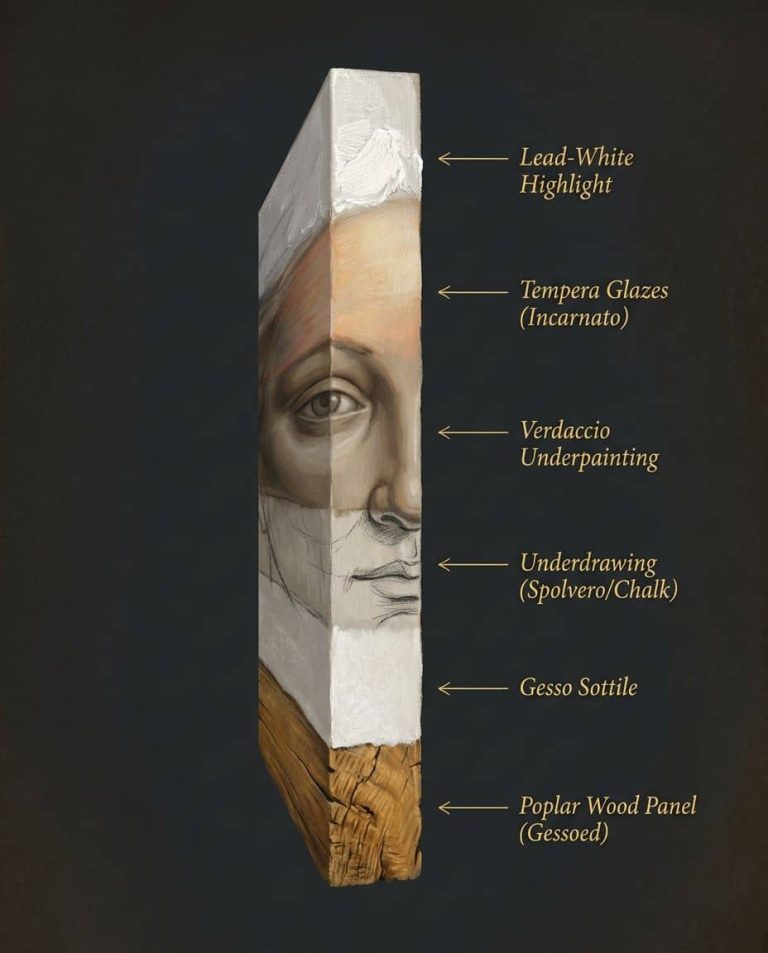
Renaissance fine art is not a museum category frozen in time. It's a working method that still has standards. The tradition begins with layered construction, often starting with poplar panels, then gesso and gesso-soaked linen, then underdrawing, then gold leaf over bole, then multiple thin egg-yolk tempera layers. That sequence mattered because it produced brilliance, fine detail, and permanence, while the gold-leaf and bole created stable highlights that a simple painted surface can't imitate. Middlebury Museum's panel-painting overview makes that technical logic clear.
Tradition as method, not costume
That's the difference between a Renaissance-style object and Renaissance fine art. One copies the appearance. The other takes on the old problem-solving habits, how to model flesh, how to hold light, how to arrange figures so the eye reads the image with force and clarity. In that sense, contemporary artists working in this vein aren't imitating history. They're continuing a grammar.
The collector's real test is simple. Does the work depend on a familiar costume, columns, robes, halos, gold, or does it show disciplined structure beneath the surface? The answer is often visible in the first thirty seconds. Surface-only work announces itself quickly. Real work keeps revealing more.
What continuity looks like in a studio
At ARTIST6, the continuity is operational rather than nostalgic. That means the work is organized around classical composition, chiaroscuro, and edition control, not around a borrowed antique mood. It also means the studio treats the image as a constructed object, not a digital mood board with a frame.
The Renaissance didn't begin as decoration. It began as a way to solve visual problems with discipline.
Collectors who understand that distinction stop asking whether a piece “looks old” and start asking whether it carries the burden of making. That's the right question. It separates living practice from surface quotation.
The Visual Grammar That Defines the Tradition
The Renaissance has a visual grammar, and collectors can learn to read it. Chiaroscuro is one part of that grammar, not as theatrical lighting, but as a structural tool for modeling volume and directing attention. Renaissance artists also leaned on triangular composition, which organizes figures into a stable shape and gives the image a clear center of gravity, a device still used when a scene needs calm authority and spatial order. This triangular composition guide is useful because it shows how the structure works as an actual compositional device, not a decorative habit.
Light, space, and the body
A figure that feels alive usually has more than good rendering. It has disciplined light. Chiaroscuro gives the body weight and helps separate form from ground. Linear perspective does a different job. It orders depth, so the viewer knows what is near, what recedes, and what should remain dominant. Sfumato and layered glazing soften edges and build tone gradually, which creates a depth direct painting rarely achieves.
The body matters too. Renaissance realism wasn't just about likeness. It was an intellectual commitment to understanding structure under skin and fabric. That's why the best work from the tradition feels measured rather than flashy. It shows anatomy as thought, not spectacle.
Historical approaches, different effects
Caravaggio and Bouguereau are a useful comparison, even though they belong to different moments. Caravaggio's tenebrism pushes contrast hard. The darkness is active, and the drama comes from abrupt revelation. Bouguereau's academic glazing is more controlled and polished. The flesh turns slowly, and the surface stays continuous. Both rely on disciplined value control, but they solve different problems.
Modern practitioners who work within the Renaissance tradition borrow the logic, not the costume. They may paint on archival paper, use pigment systems built for stability, or shape digital studies before rendering the final image by hand. The point isn't to recreate old materials for their own sake. It's to achieve the same clarity, depth, and control under current conditions.
If the light doesn't model the body, the image stays flat, no matter how ornate the subject.
Materials and Methods That Built the Foundation
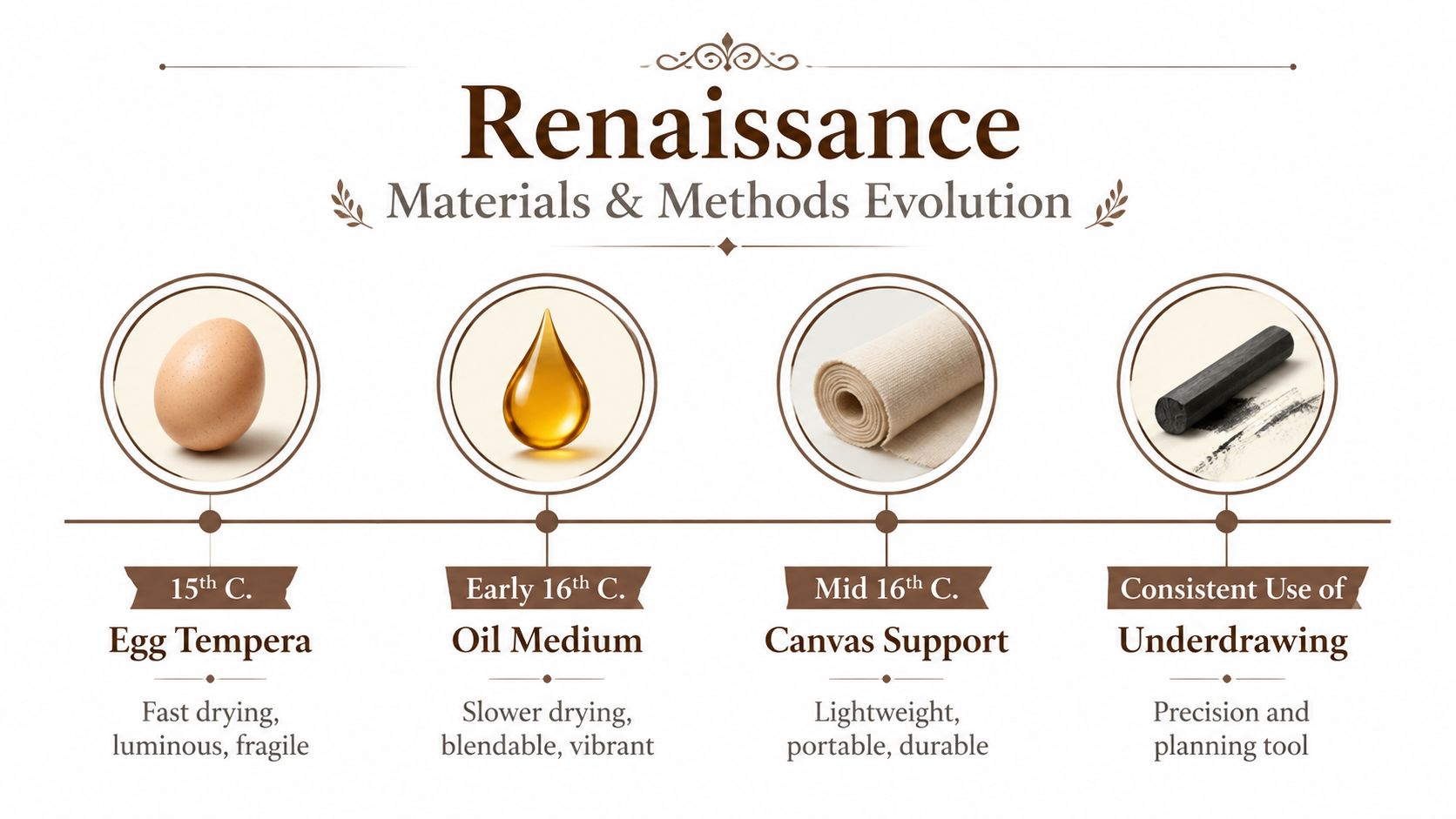
The Renaissance workshop was practical before it was romantic. Artists chose materials because they solved problems. Egg tempera gave speed and luminosity, while later oil handling opened the door to slower blending and more controlled glazing. That material shift mattered because the artist could keep developing tone after the first pass, instead of locking the image too early.
Why the support matters
A support is not just a backing. It determines how long the image can remain stable. Historical panel work depended on prepared surfaces that resisted distortion. Later stretched linen offered a different balance of portability and durability. Both were answers to the same issue, how to keep the painting physically coherent over time.
Pigments were chosen the same way. Earth colors, whites, and costly blues weren't selected only for prestige. They were chosen because they behaved well optically. Some gave better body, some gave stronger tinting power, some held their character over time. That is the logic contemporary collectors should still demand from an artist's materials statement.
A studio choice, not a nostalgia exercise
Modern Renaissance-derived work should be built with the same empirical pressure. Substrate, ink or paint system, surface preparation, and storage all matter. A piece that looks convincing on release day but degrades quickly has missed the point. The original workshops aimed for survival, not the first sales cycle.
For collectors who want a practical entry point into this material world, convert images to oil paintings is a useful reference because it shows how digital image handling can still point back toward painterly structure. That matters when the goal is not imitation for its own sake, but a controlled transition from source image to finished object.
Contemporary Tools and Classical Composition
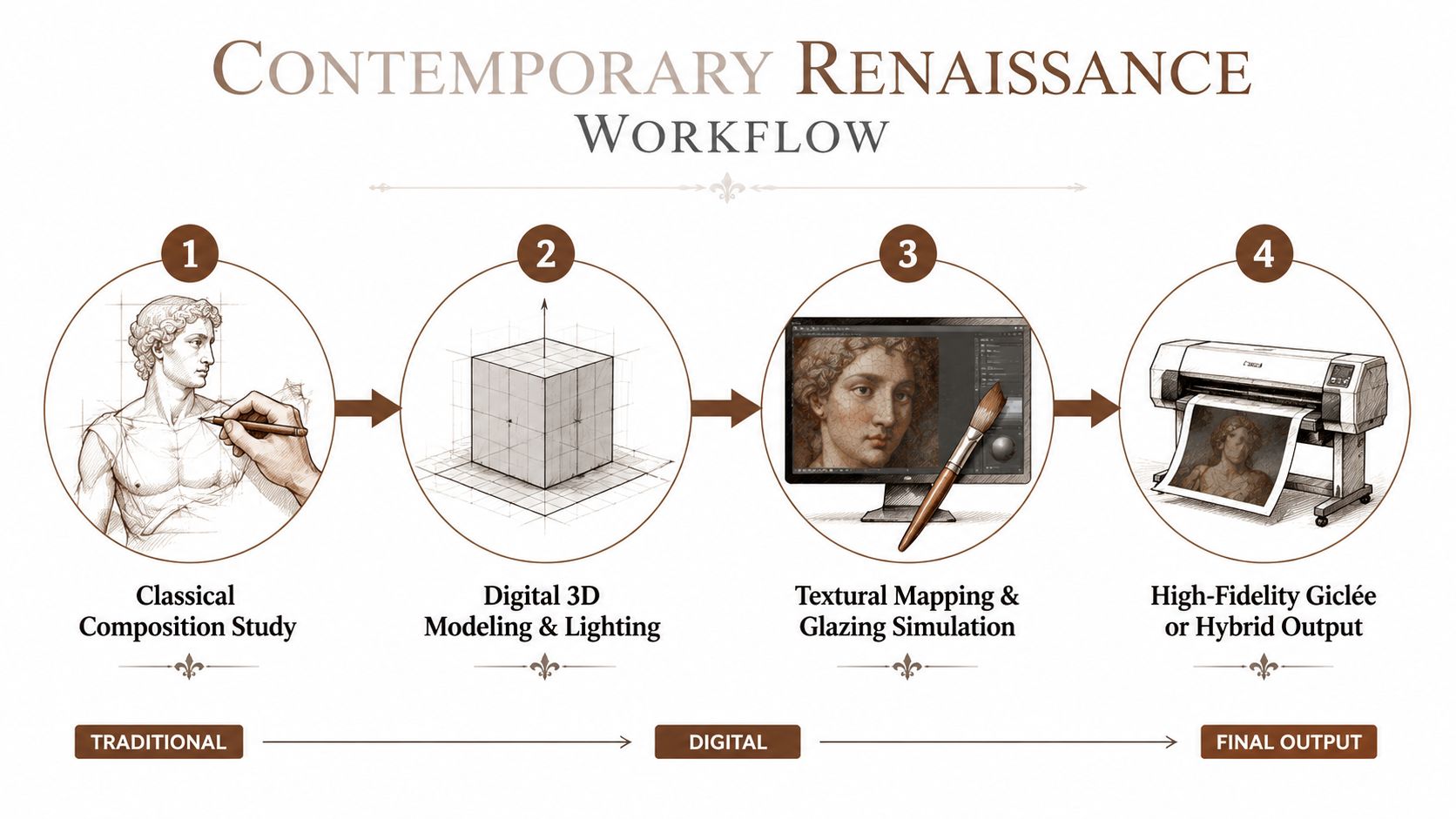
Modern tools strengthen Renaissance fine art when they are used for planning, testing, and revision. A 3D model, a digital underpainting, or an AI-generated study can serve the same role that cartoons, studies, and workshop drawings once served. They check structure before the final surface begins. The core question is authorship. Who is making the decisions, and who is only pressing buttons?
Tool as assistant, not substitute
A compositional study can be generated quickly, then rejected, adjusted, or redrawn by hand. That workflow is close to the old workshop method. Renaissance masters did not move straight from idea to final panel. They built toward the image through selection, correction, and repeated planning. Contemporary fine art practices work best when the artist keeps that chain intact, from first sketch to finished object.
The trade-off is clear. Digital speed can improve precision, but it can also flatten judgment if the artist accepts the first pass. A convincing classical surface needs sequence, not just effects. Eyes, drapery, and space have to belong to the same visual logic. If they do not, the work reads as a filter, not as a constructed image.
What collectors should look for
Collectors should ask for proof, because proof matters more than mood. A transparent workflow gives more than a story about process. It shows the work was built with intent, and that the edition rules are explicit. It also shows where hand judgment enters the final stage, which is often where value resides.
ARTIST6 is one example of a studio that treats digital tools as part of the preparatory chain rather than a replacement for it, with final works issued as limited, signed, and numbered archival editions. The important point is not the software. It is the line of control from concept to output, and whether that line can be verified.
For collectors who want a wider frame for the medium, contemporary fine art practices show how current artists keep the tradition active without pretending the studio has frozen in time.
A digital study can widen the field. It can't replace selection.
How to Assess Authenticity and Edition Integrity
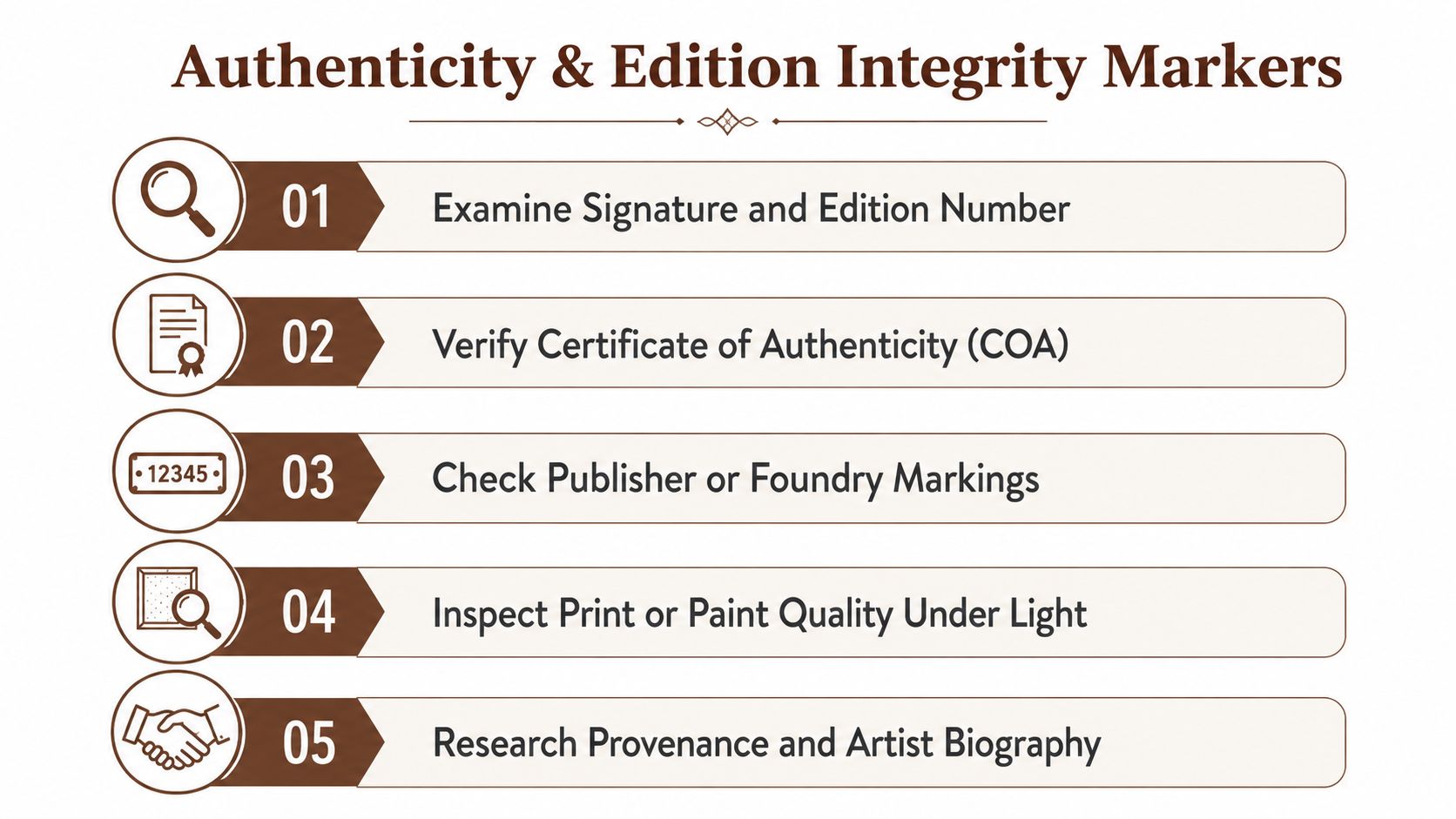
A collector doesn't need to become a conservator, but they do need a disciplined checklist. Start with the certificate. It should name the work, the edition, and the artist or studio clearly enough that the record can be traced later. Then look for a numbered edition, not a vague promise of scarcity.
What to ask before you buy
Ask for the edition size and whether the plate, file, or matrix is retired after closure. Ask whether the print or object is made on archival, acid-free, lignin-free support. Ask how the work was stored, handled, and signed. If the artist used digital or AI-assisted stages, ask for that disclosure plainly. Buyers who want contemporary Renaissance fine art are entitled to know where authorship begins and how it was carried through.
A few checks are practical and fast:
- Verify the edition language. Limited editions should not be described loosely.
- Read the material sheet. Look for substrate, pigment, and finish details.
- Inspect the surface under light. The image should hold together, not flatten into glare or print noise.
- Confirm provenance. The work should have a traceable chain from studio to owner.
- Compare the claim to the object. The evidence should match the story.
The National Park Service defines permanence as the degree to which paper remains chemically stable and resists deterioration, which is a better lens than marketing language. Its paper-objects guidance also reinforces the basic archival logic, pigment inks, acid-free paper, and UV protection.
What not to mistake for value
Open editions disguised as limiteds are a common trap. So are giclée prints sold as original fine art without clear edition terms. AI-generated images sold without process disclosure create a different problem, one of authorship opacity. If the seller can't tell you how the work was made, they're asking you to trust the surface instead of the record.
This limited-edition print guide is worth reading because it frames edition integrity as part of the object's identity, not an afterthought.
| Marker | Why it matters |
|---|---|
| Signed and numbered edition | Confirms scarcity and traceability |
| Certificate of authenticity | Links the object to the studio record |
| Archival substrate | Supports long-term stability |
| Process disclosure | Clarifies authorship |
| Provenance chain | Protects secondary-market confidence |
Display and Integration in Contemporary Spaces
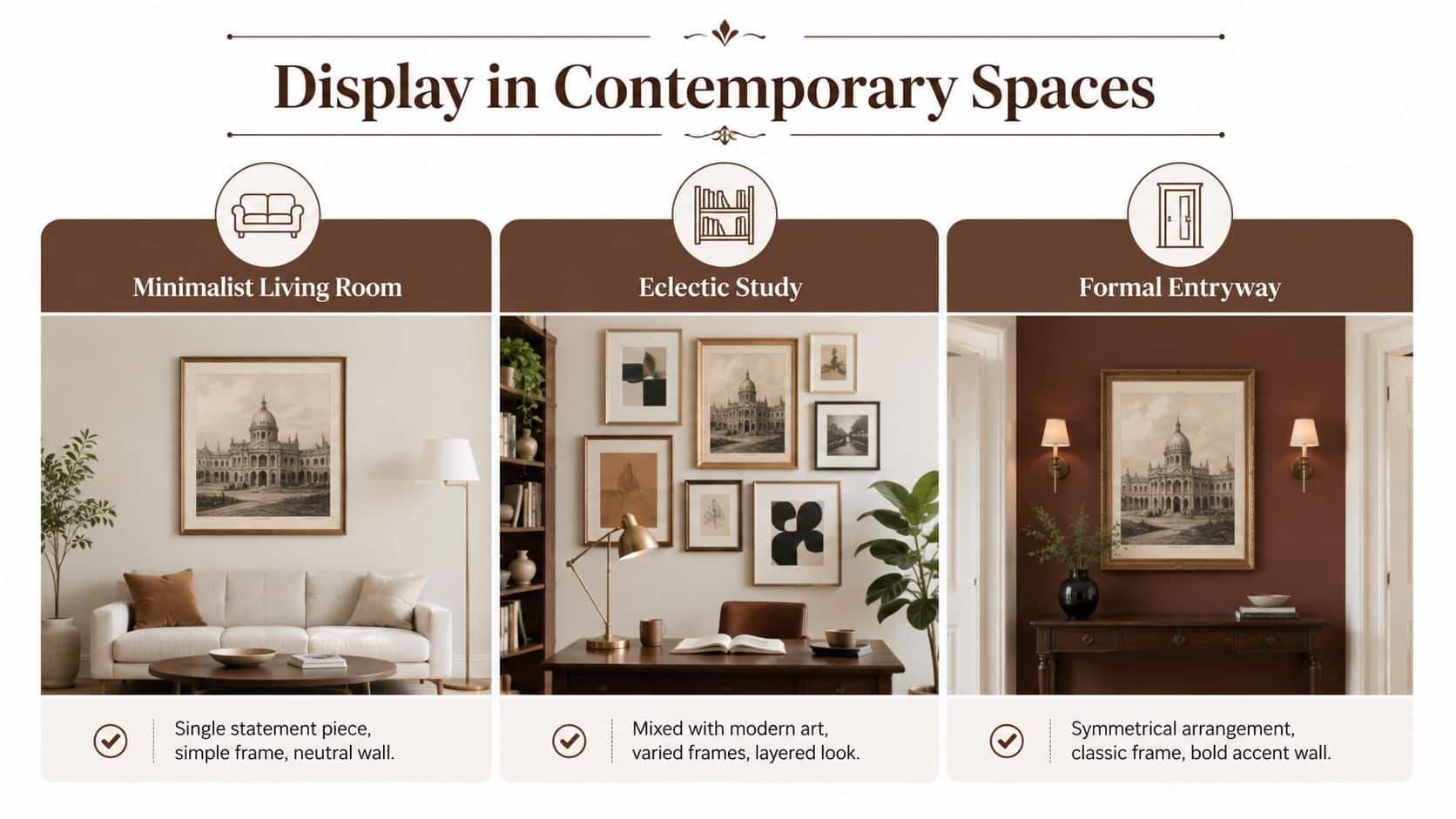
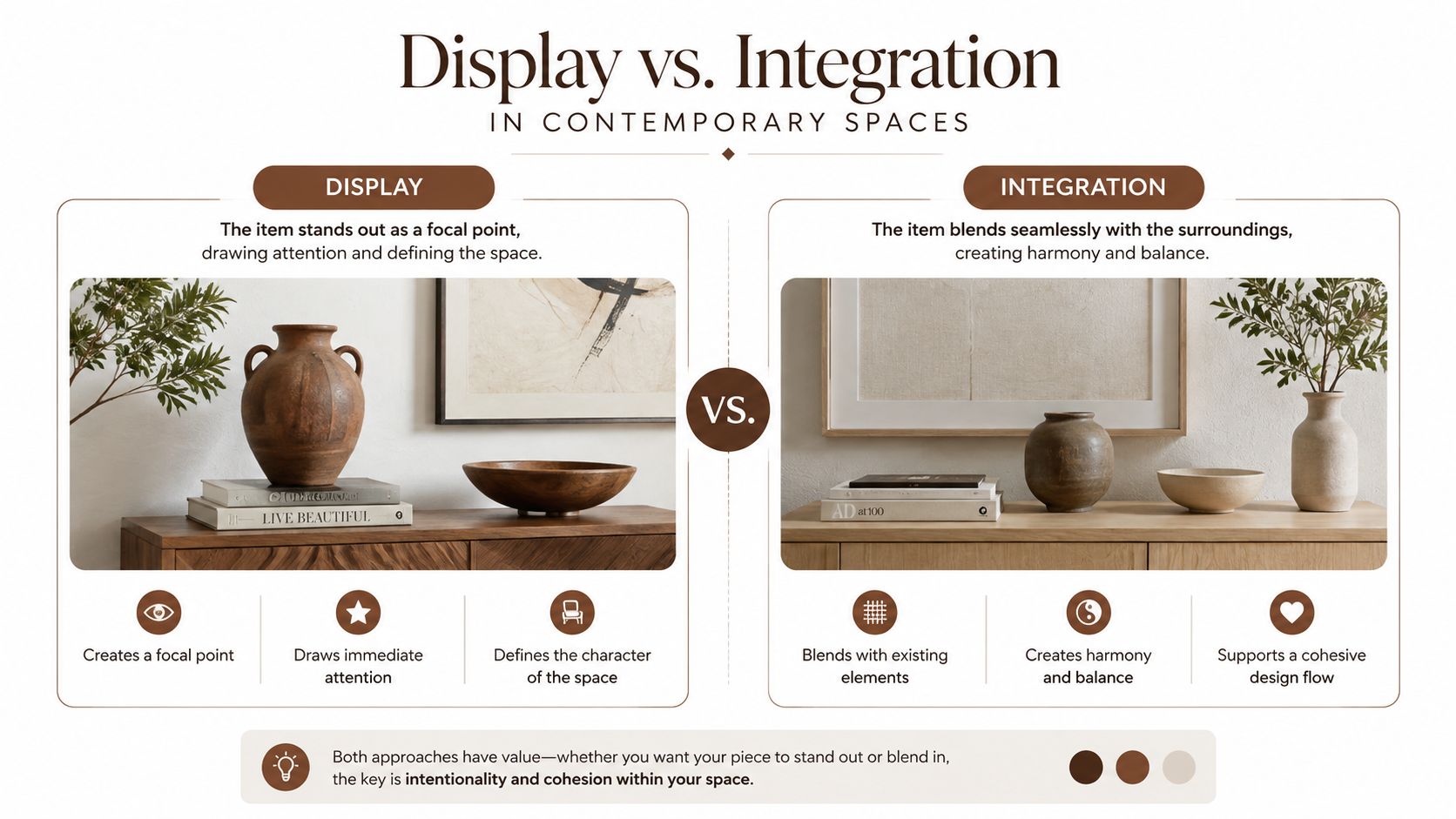
Renaissance-derived work can sit in a minimalist room without losing seriousness. It can also live in a formal interior without turning into theater. The key is restraint in presentation. A heavy frame, a floating frame, or a salon grouping each changes how the eye reads the work, and each sends a different signal about intent.
Three display paths
A period-appropriate moulding can reinforce lineage. It makes sense when the work depends on classical gravity and the room can support it. A floating frame creates a sharper contrast. It keeps the object contemporary, while letting the technique feel old in the best sense, deliberate and controlled. A salon-style grouping works when the piece is part of a larger visual argument, especially in spaces where modern and classical works are meant to speak to each other.
Lighting matters more than most buyers think. Chiaroscuro needs directional light to show the model of the face and hand. Layered glaze needs enough calm illumination to let depth emerge without washing out the surface. For archival prints, the same principle applies. Keep glare, humidity swings, and poor framing in check.
Matching room to object
Scale is part of the decision. A single restrained work can anchor a living room or study without crowding it. In a foyer or hospitality setting, symmetry and spacing often help the image hold its own. The room should not compete with the work. It should make the work legible.
For packing and movement, shipping framed and canvas art UK is a sensible resource because it reminds owners that handling is part of preservation. That’s not glamorous, but it matters if the piece is meant to live, travel, and retain value.
Good display doesn’t decorate the work. It lets the work stay itself.
Why Transparency Matters More Than Mystique
Mystique is easy to sell and hard to trust. In contemporary Renaissance fine art, the stronger model is transparency. Collectors want to know what the work is, how it was made, what parts were hand-rendered, what parts were digitally assisted, and how the edition is controlled. That isn’t a burden. It’s the basis for confidence.
What transparency actually gives buyers
When a studio publishes substrate details, pigment or print specifications, edition size, and a clear process record, the buyer can verify the object instead of guessing at it. That matters because provenance gaps weaken trust over time. It also matters because the secondary market likes records that can be checked.
Market commentary is already pointing toward a preference for human-made work, visible process, and authenticity in 2026, alongside growing direct-to-collector sales and affordable originals. Recent art-market commentary suggests buyers are moving away from “classical look” alone and toward work with verifiable making. That doesn’t reduce the value of the tradition. It strengthens it.
The same clarity is needed in AI-assisted work. The issue isn’t whether a tool was used. The issue is whether the collector can see where the artist’s judgment entered the process. Recent reporting tied to Art Basel and UBS 2026 findings says just over half of fine art collectors bought a digital artwork in 2025, digital art’s share of sales nearly tripled from 2024 to 2025, and collectors are actively asking for clear AI disclosure. This market summary makes the point plainly. Buyers will accept new tools when the process is visible.
ARTIST6 publishes technical dossiers alongside releases, including process notes and archival details, because that’s the contemporary version of workshop accountability. The studio doesn’t ask collectors to believe in a mystique. It offers a record. That is what makes Renaissance fine art live now, as a collectable practice rather than a borrowed look.
If you want to see how this practice works in concrete terms, visit ARTIST6 fine art. The work is built for collectors who care about classical composition, transparent authorship, and archival permanence. Start there if you want a Renaissance fine art print artifact that can be checked, not just admired.