
Limited Edition Artwork Prints: A Collector’s Guide
“Limited edition” is often treated as enough information. It isn't. A signature, a certificate, and a polished product page can still leave the central question unanswered: what prevents the studio from making more?
Serious limited edition artwork prints rely on visible rules. The edition has a declared cap. Each impression can be identified. The artist closes the plate, file, or production run and records the decision. Materials, pricing, and ownership history should remain open to inspection. Without those controls, scarcity is only language.
Table of Contents
- What Actually Makes a Print Limited
- The Market for Limited Edition Artwork Prints
- Materials and Craft Behind Archival Prints
- Pricing Transparency and Provenance
- Caring for and Displaying Archival Prints
- Building a Cohesive Collection
- What a Transparent Studio Practice Looks Like
What Actually Makes a Print Limited
Not every print described as limited is equally scarce or trustworthy. The phrase has meaning only when the production rules are fixed and enforceable. An edition is a defined number of impressions made from one plate, and a limited edition means the artist won't make further impressions later. That distinction separates a closed edition from an open-ended run dressed in scarcity terms. Contemporary Stuff's history of limited editions traces how edition size became part of a print's identity and value as print culture developed.
The controls that matter
A credible listing should tell you:
- The total edition size: The final number must be declared before purchase, not inferred from changing stock levels.
- The individual number: A notation such as 17/50 identifies the impression and the total edition. The first figure is the print's place in the sequence, while the second states the complete run.
- The artist's signature: A handwritten signature connects the object to the declared edition and gives future buyers a physical detail to compare.
- The closure rule: The artist should state that no reprints, smaller reissues, posters, or digital-file releases will follow closure.
The individual number matters less than the total cap, condition, and provenance. A low number doesn't automatically make a print more desirable. A damaged first impression remains a compromised object, while a well-preserved later impression may carry stronger practical value.
The wording in a listing deserves close attention. “Limited availability” may describe current stock, not a permanent edition. “Signed reproduction” confirms a signature but says nothing about the total number produced. “From a limited series” can refer to a body of work rather than a capped run.
A useful example is the structure described on ARTIST6's signed and numbered limited-edition print page. The important questions aren't decorative. They're whether the edition size is stated, whether each print is signed and numbered, and whether the studio has committed to closure.
Practical rule: Treat an edition as limited only when the cap and the no-reprint policy are both explicit.
A certificate helps, but it doesn't replace the underlying rule. The strongest practice combines a fixed edition, physical markings, a seal or equivalent control, and a record that remains available after the edition sells out. That structure gives scarcity a history rather than a slogan.
The Market for Limited Edition Artwork Prints
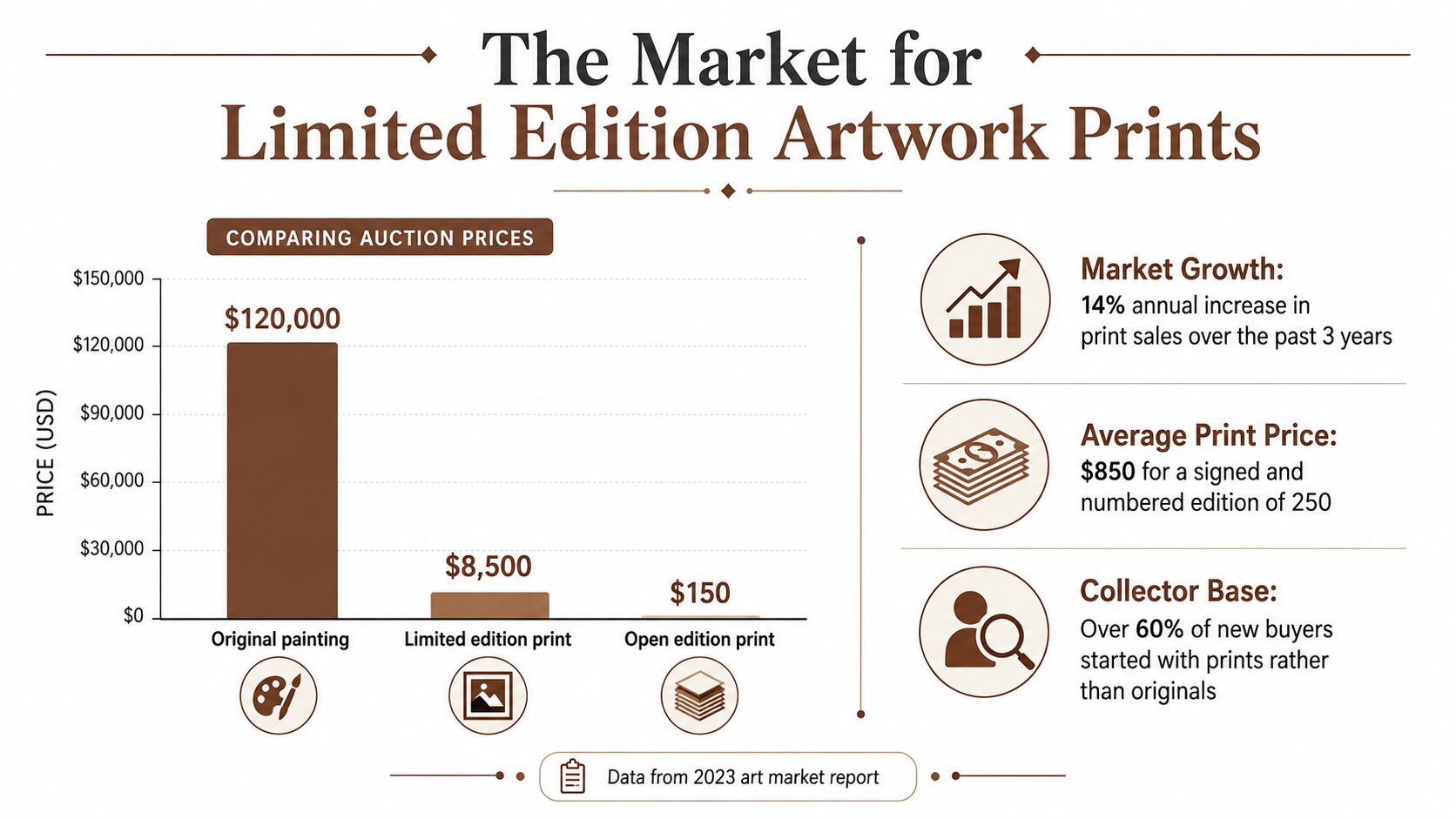
A limited-edition print can be scarce yet still be difficult to trust. Market activity matters, but the stronger signal is structural: a fixed cap, a published pricing schedule, and a public record that lets a buyer verify what was made and sold. Without those controls, “limited” may describe a sales tactic rather than a durable edition.
Prints have their own buyers, production costs, and resale patterns. Auction activity shows both the opportunity and the risk. Artnet reported 54,602 print lots sold at auction in 2024, the highest total in a decade, while total print sales value fell 14% year over year, from about $427 million in 2023 to $368.4 million in 2024. Artnet's market reporting, summarized by Maddox Gallery, makes the distinction clear. More lots can sell while overall prices soften.
Different segments behave differently
Modern prints led auction sales in 2024 at $72.8 million, followed by contemporary prints at $55.6 million and Old Masters prints at $43.3 million. These totals describe segments, not a forecast for any individual edition. Period, artist relevance, condition, documentation, and the way a studio controls supply all affect the result.
A separate report estimated the global art prints market at $5.6 billion in 2024 and projected it to reach $9.6 billion by 2033, with a projected 6.2% compound annual growth rate. Treat that projection as a market outlook, not a promise attached to a particular print. Limited-edition artwork prints sit within an active global art economy, but demand does not compensate for unclear records or inconsistent release practices.
What the numbers can and can't tell you
Auction records help indicate liquidity and market attention. They do not replace inspection of the object, its condition, technique, paper, signature, edition documents, or ownership history.
A studio's public registry can add a different kind of evidence. ARTIST6's contemporary fine art practice and presentation provides a useful reference for judging whether production, documentation, and presentation are treated as connected parts of the work. Published prices also matter. A collector should be able to see whether the same edition is offered under shifting terms or according to a stated schedule.
Photographers and studios comparing distribution options can consult this guide to sales channels for photographic editions. The route to market shapes how buyers encounter an edition, while the registry, cap, and pricing record determine whether its scarcity can be checked later.
Materials and Craft Behind Archival Prints
A limited run doesn't make a weak print durable. Longevity comes from the material stack and from the care taken during production. A poster printed with unstable dye ink remains vulnerable even if the seller numbers every copy.
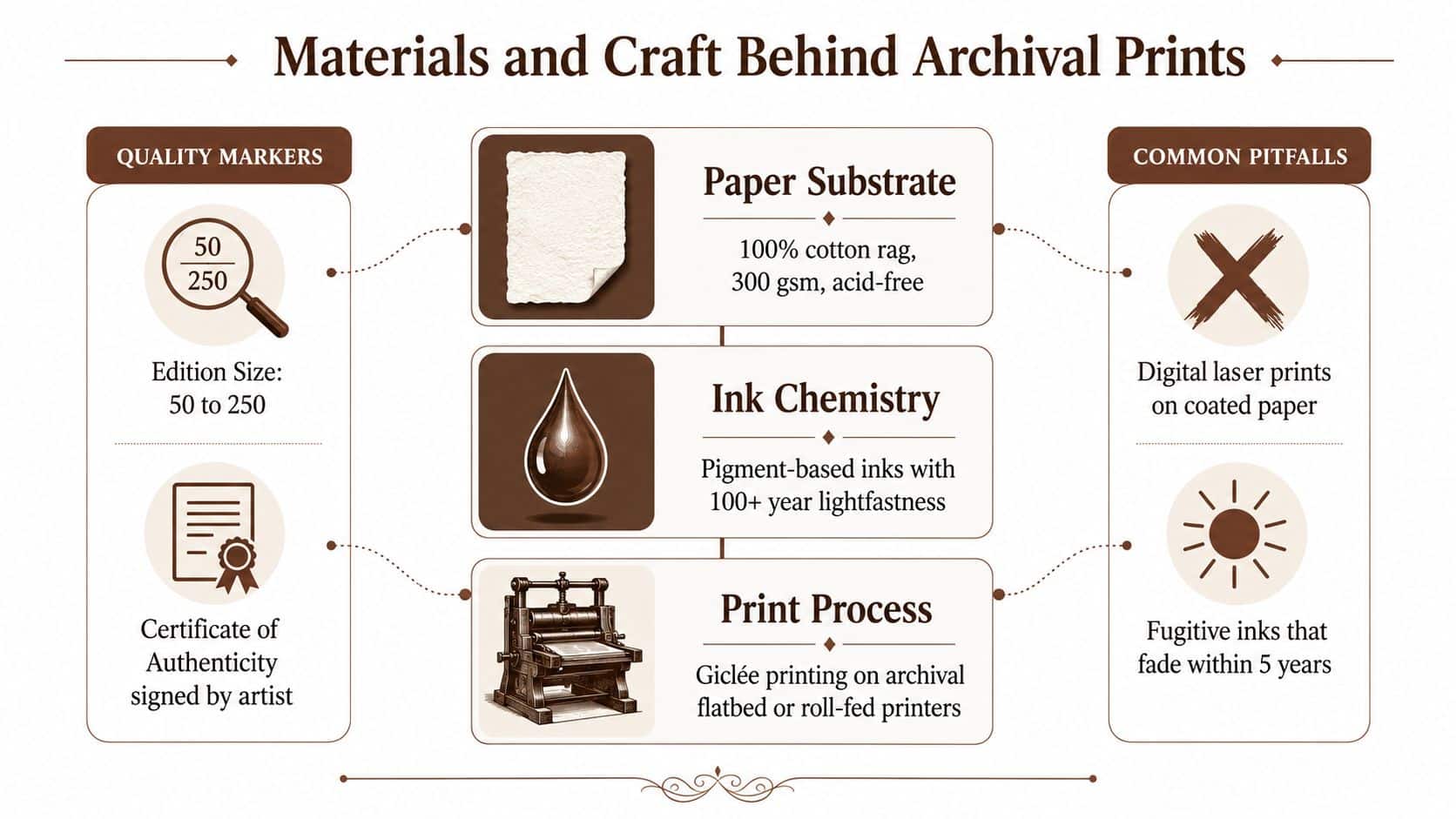
Archival or museum-grade prints typically use acid-free 100% cotton rag or alpha-cellulose paper with pigment-based inks. Pigment particles resist ultraviolet exposure, ozone, and humidity more effectively than dye inks. Conservation guidance commonly discusses permanence in the 100 to 200-plus year range under proper display conditions, but the number depends on the materials, light environment, handling, and storage. Art Academi's guide to museum-grade giclée printing explains this material relationship.
Audit the paper first
Ask for the paper name, not only the word “archival.” Acid-free cotton rag gives the print a stable, substantial substrate. Alpha-cellulose papers can also be appropriate when they're manufactured for conservation use. Weight, surface, and absorbency affect how pigment settles and how the image reads, but a heavier sheet alone doesn't prove permanence.
A studio should be able to identify:
- The substrate: Look for acid-free fine-art paper, cotton rag, or a clearly specified alpha-cellulose sheet.
- The ink chemistry: Pigment-based inks are the relevant indicator for long-term color stability.
- The process: Giclée printing can produce fine tonal transitions, but the label matters less than the actual printer, ink set, paper, and color management.
- The production record: Serious studios document the paper and printer so the buyer can verify what was made.
Read the physical evidence
Check the print in person when possible. The paper should feel appropriate to the stated specification, the image should show controlled detail rather than coarse mechanical dots, and the signature should sit consistently with the edition markings. Compare the certificate with the physical number. A mismatch creates an immediate documentation problem.
Red flags include vague paper descriptions, no ink information, coated poster stock, inconsistent numbering, and claims of archival quality based only on a brand name. Jeff Dillon's explanation of archival giclée printing makes the central point clearly: permanence depends on pigment inks, acid-free fine-art paper or canvas, production discipline, and color management.
Photographic editions deserve the same scrutiny as figurative or painterly work. A useful visual reference for the relationship between subject, process, and printed surface is this collection of architectural print photography from Jimmy Clemmons Photographer. The image may attract you first, but the physical specification determines how responsibly it has been made.
Pricing Transparency and Provenance
Price and provenance answer different questions. Pricing tells you what the studio is asking. Provenance tells you what the object is and where it has been. A transparent practice makes both easier to inspect.
In an opaque model, the buyer may see a current price without knowing whether it has changed, why it changed, or whether future buyers will receive a different offer. Ownership records may depend on a paper certificate that can be misplaced. In a transparent model, the studio publishes a schedule, identifies the edition, and preserves a record that can be checked after the initial transaction.
Two models side by side
| Dimension | Opaque Model | Transparent Model |
|---|---|---|
| Edition cap | Described broadly or left unclear | Declared before sale |
| Numbering | May appear without a public total | Individual number matches the registered edition |
| Reprints | Policy may be unstated | Closure and no-reissue rules are published |
| Price changes | Discretionary or unexplained | Scheduled steps are visible in advance |
| Provenance | Depends on invoices or certificates alone | Ownership documents combine with a public record |
| Sell-out status | Difficult to verify later | Registry preserves the edition's status |
| Resale checks | Buyer reconstructs the history | Buyer cross-checks physical and digital records |
The point of a price schedule isn't to manufacture urgency. It's to remove surprise. A studio can publish step increases at defined sell-through points, such as 25%, 50%, and 75%, so every collector understands the terms before buying. That approach rewards early attention without pretending that a fluctuating price is an organic measure of artistic worth.
One pricing guide describes limited editions using caps such as 10, 25, 50, 100, or 250, with works commonly signed and numbered in forms such as 17/50. It also describes prices rising after roughly 80% of an edition sells quickly. These are examples of practices in the market, not universal rules. This guide to pricing art prints is useful precisely because it shows why a studio should publish its own policy instead of leaving buyers to guess.
Provenance needs more than a certificate
Request the invoice, ownership history, exhibition record when relevant, and photographs of signatures or markings. Cross-check the physical details against the studio's record. Provenance means the documented history from creation to the present, not merely a decorative document included in the package. The Fine Art Ledger's provenance guide outlines the records collectors should seek.
A public registry adds a durable reference point. One print-collecting source describes Hahnemühle's My Art Registry as a permanent record for each artwork and edition, alongside individual signatures and numbers. Peter Delaney Photography's collecting notes show how registry-style documentation can support ownership verification.
A certificate travels with the print. A registry lets future buyers check the edition itself.
Caring for and Displaying Archival Prints
Archival materials need sensible conditions. They aren't indestructible. Direct light, unstable humidity, poor framing, and careless handling can damage a print regardless of how well it was produced.
Start with the frame. Use UV-protective glass or acrylic, acid-free matting, and an acid-free backing board. Leave a small gap between the print and glazing so the paper doesn't press against condensation or the glass. A professional framer should understand conservation mounting rather than treating the print like a poster.
A practical display checklist
- Control the light: Keep direct sunlight away from the work. Strong exposure accelerates fading even when pigment inks are used.
- Stabilize the room: Avoid sharp swings in temperature and humidity. The supplied display guidance recommends humidity between 40% and 55%.
- Choose the wall carefully: Don't hang a print above a fireplace, in a bathroom, or against a damp exterior wall.
- Use the right glazing: UV protection reduces exposure, while acrylic can be preferable where breakage or weight presents a concern.
- Mount without pressure: A qualified framer should allow the paper to sit naturally within the mount.
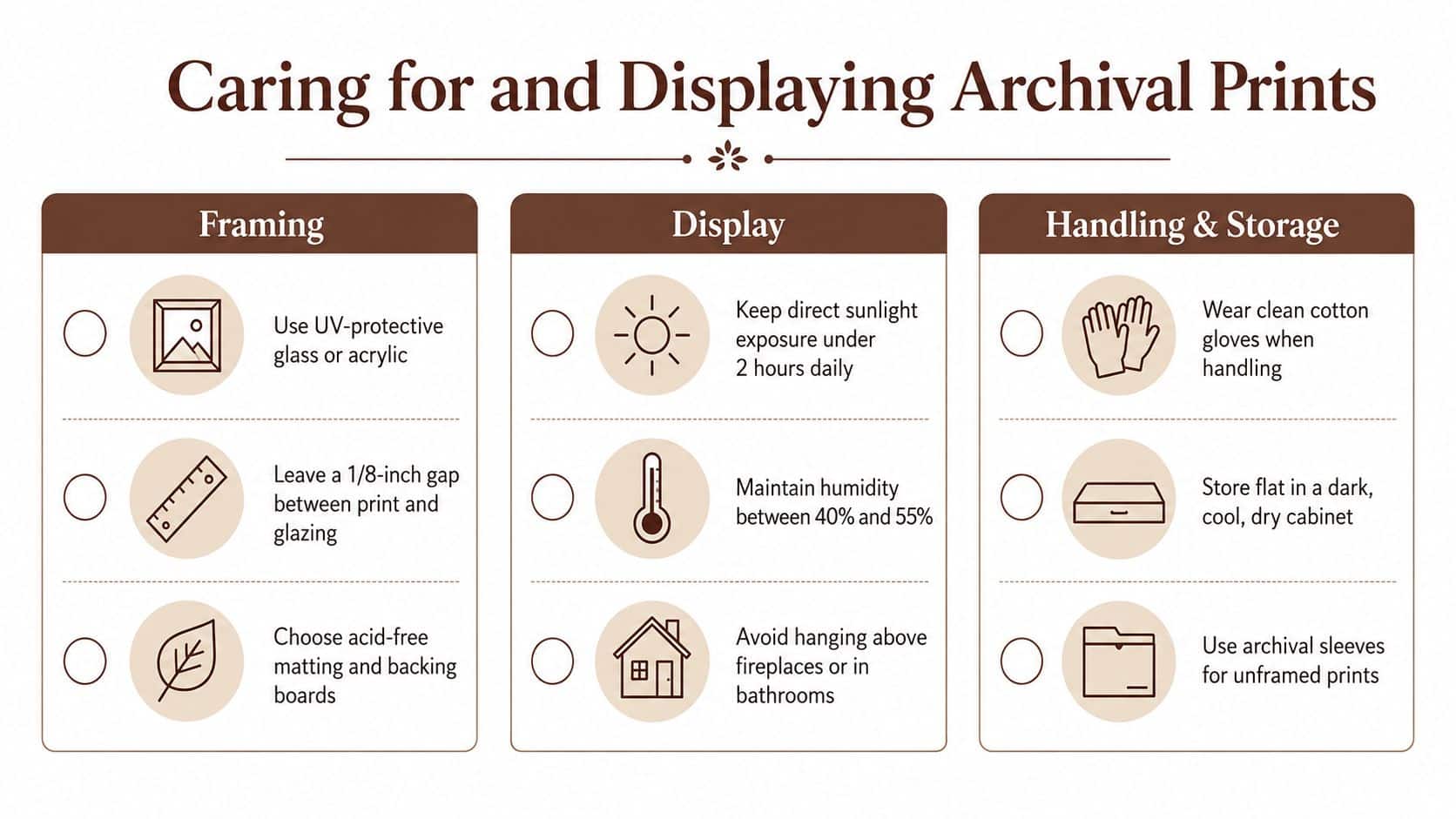
The same discipline applies when the print is between homes. Handle it with clean cotton gloves, support the sheet from underneath, and never drag it across a table. For storage, keep an unframed print flat in a dark, cool, dry cabinet inside an archival sleeve. Don't place heavy objects on top, and don't roll a fine-art sheet unless the studio or conservator specifies a suitable method.
Moving requires another layer of care. The practical guidance in this resource on safe art packing for movers is relevant when a framed or unframed print leaves its usual environment. Packing should protect the glazing, corners, surface, and frame from pressure and vibration.
A short visual guide can help a household or office team follow the same handling routine:
For offices, hospitality interiors, and shared spaces, the hanging plan matters as much as the frame specification. Art prints for offices should be positioned away from harsh windows, heat sources, and high-contact areas. The best conservation system is the one staff can maintain consistently.
Building a Cohesive Collection
Reactive collecting produces isolated successes. One print follows a room's palette, another follows a passing interest, and a third arrives because it was available at the right moment. The result may contain good objects without forming a meaningful collection.
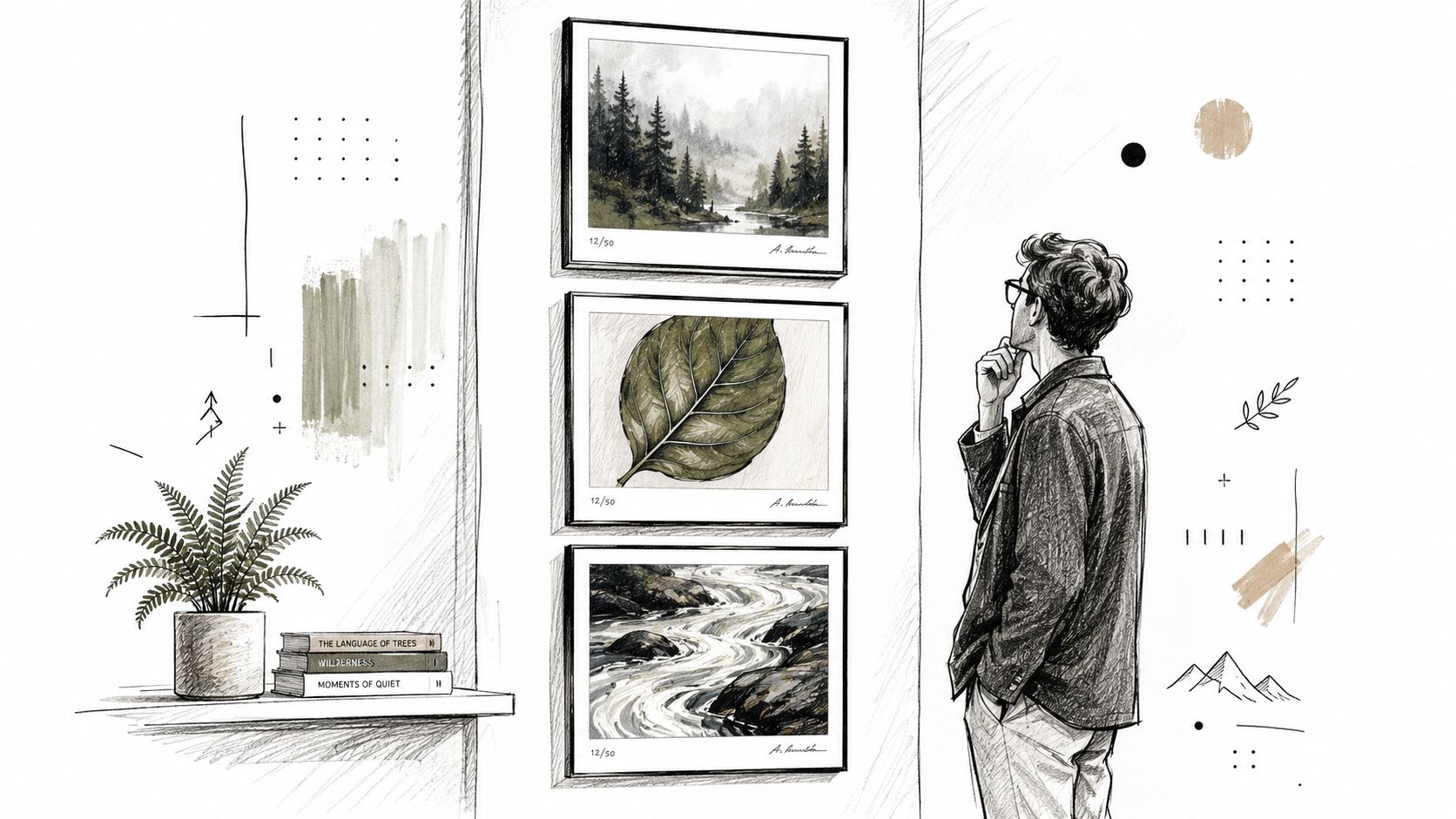
A chapter-based release solves part of that problem. The studio develops a related body of work with a shared visual grammar, subject, or period of research. Collectors can buy one piece and leave room for later additions that belong to the same conversation.
Collect by relationship, not by accumulation
Before buying, identify what links the works:
- Subject: Do the pieces return to a recognizable set of figures, plants, or symbols?
- Composition: Do they share devices such as triangular structures, frontal figures, or controlled negative space?
- Palette: Bronze, umber, ochre, oxblood, lapis, and gold can create continuity without making every work identical.
- Scale: Related dimensions make a future wall easier to plan.
- Release logic: Does the studio publish complete chapters, or does it add isolated works whenever demand appears?
A coherent series gives a collector narrative depth. It also reduces the pressure to fill a wall immediately. The first work can stand alone while establishing a visual anchor for later purchases.
The opposite approach isn't always wrong. A collection built around a medium, a historical method, or a single artist can remain compelling even when the subjects vary. The mistake is accidental fragmentation, not variety itself.
Consider the room before the purchase. Measure the wall, note the existing frame finish, and decide whether the work will lead the space or sit within an established arrangement. Leave space for future pieces if the release is designed to unfold in chapters.
A chapter structure also helps with provenance. Each work can retain its own edition record while remaining connected to a larger body of work. That gives the collector two forms of identity, the individual print and the series it belongs to.
The strongest collecting plans stay selective. Don't buy every available piece because it belongs to a chapter. Choose works that create a visual exchange across the room, then let the collection develop at the pace of the work.
What a Transparent Studio Practice Looks Like
A disciplined studio doesn't ask collectors to confuse mystery with seriousness. It shows how the work is made, what references shaped it, which tools were used, and how the edition will be controlled after release.
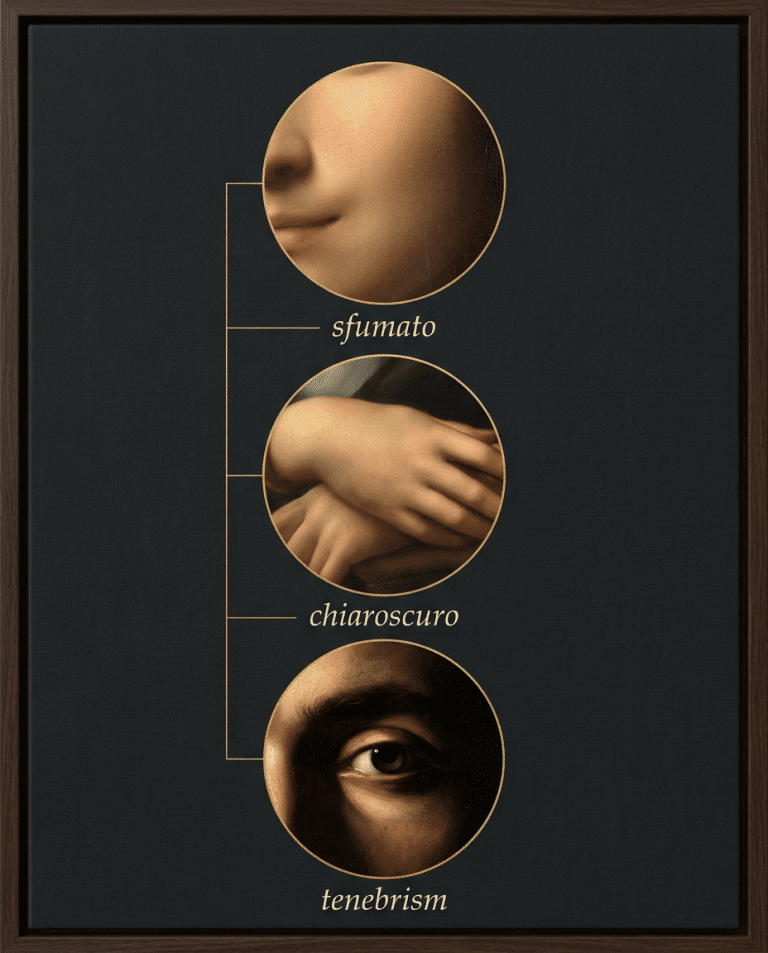
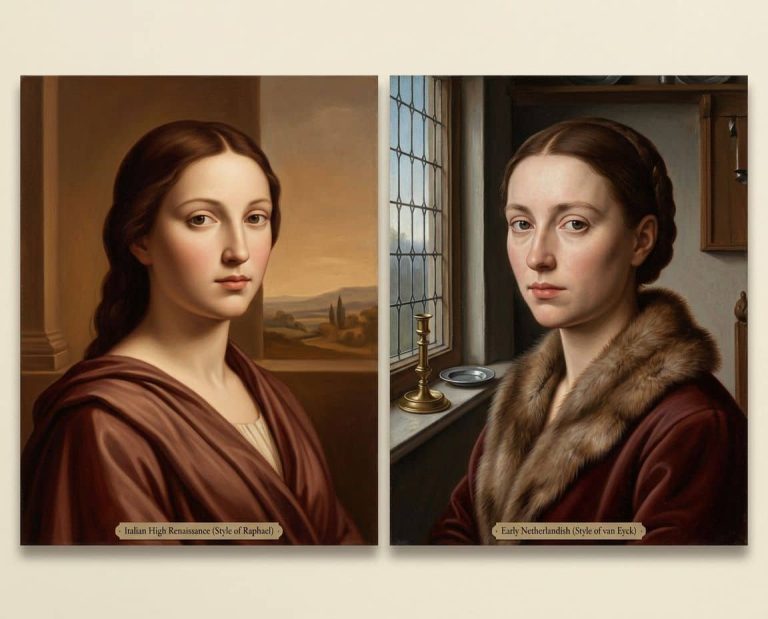
A single-artist practice working with Renaissance-derived methods might draw on chiaroscuro, figurative composition, triangular structures, and a palette of bronze, umber, ochre, oxblood, lapis, and gold. Contemporary tools can sit inside that method. AI-assisted image generation may function as a tool comparable to a camera, while the artist still curates outputs, hand-finishes the selected image, and makes decisions about composition, color, paper, and print production.
The record should match the object
A trustworthy studio publishes enough process information for a buyer to understand authorship and construction. That record can include:
- References: The visual and historical sources behind a chapter.
- Iteration: How the image changed before the final file was prepared.
- Production: The printer, paper, ink approach, and finishing decisions.
- Edition control: The cap, numbering method, seal, registry entry, and closure policy.
- Fulfillment: What the collector receives and how the work is documented.
For example, ARTIST6 produces contemporary Renaissance fine art in limited editions of six, with each print signed, numbered, and sealed, then entered into a permanent public registry. Its chapter releases include ANIMA MUNDI, LUMEN SYLVARUM, and THE HORTUS EDITIONS. The studio publishes a price schedule with steps at 25%, 50%, and 75% sell-through, and states that closed editions won't return as reprints, smaller reissues, posters, or digital-file releases.
That model doesn't remove judgment from collecting. It makes judgment possible. Buyers can assess the work, the materials, the edition policy, and the documentation without relying on private assurances.
A transparent practice treats collectors as informed participants. The object on the wall then carries more than an image. It carries a declared method, a traceable edition, and a promise that can be checked.
ARTIST6 offers chapter-based contemporary Renaissance fine art as signed, numbered, sealed archival prints, supported by a permanent public edition registry and published pricing rules. Visit ARTIST6 to review the current chapters, process documentation, and available editions before choosing a work for your collection.